
The Achilles Heel Clinic: We keep Glasgow moving
More Than a Running Shop
Most people know Achilles Heel as a running shop. The shoes, the kit, the team who run themselves and know what they're talking about. But there's another side to what we do, one that's been part of the picture for years and quietly keeps Glasgow's runners moving when things go wrong.
The Achilles Heel Clinic. And given the name, it makes a lot of sense.
A Name That Tells the Story
The shop's origins are well known by now. Back in 2000, Katie was driving an hour to Edinburgh just to buy proper running shoes, because Glasgow didn't have what runners needed. Not the gear, not the expertise, not a place that understood the difference between a trainer and a running shoe. So rather than keep making that journey, she built what was missing herself.
The name came from a deeply personal place. Katie ruptured her Achilles tendon during the Edinburgh Marathon, and the shop's name serves as a permanent reminder, along with the scar, of pushing through pain to build something lasting. There's a certain honesty in naming your business after an injury. It signals, right from the start, that this is a place that understands what it means to be sidelined, and what it takes to come back.
Twenty-five years on, that connection between injury and recovery isn't just a founding story. It's built into how the whole store / clinic connection works. A running shop that understands injury, paired with a clinic that gets runners back on their feet. The two sides complement each other in a way few retailers can match. You can get fitted for the right shoes on one side of the door, and have your recurring injury properly assessed on the other side. 
Not Just for Athletes
There's a common assumption that a sports injury clinic is only for sporty people. It's an easy mistake to make, but it misses most of who actually walks through the door.
Think about whose bodies take the most punishment day to day. It's not only the marathon runners and the gym regulars. It's the nurses on their feet working through a twelve-hour shift. The waiters and bar staff covering miles of hard flooring every day. The hairdressers standing in one spot with their arms raised for hours. The delivery drivers, the carers, the warehouse staff, the cleaners.
These are physical jobs, and they place real, repetitive demands on the body—often more relentless than a training plan, because there's no rest week and no off-season. The aches, the strains, the chronic niggles that come from doing the same movement thousands of times: that's exactly the territory the clinic works in.
And then there's everyone else. The person whose back has seized up from years at a desk. The new parent whose shoulders are wrecked from carrying a toddler. Someone recovering from surgery, managing a long-term condition, or simply wanting to move through their day without pain. You don't need to call yourself an athlete to deserve proper care. You just need a body that isn't working the way it should.
More Than Just Physio
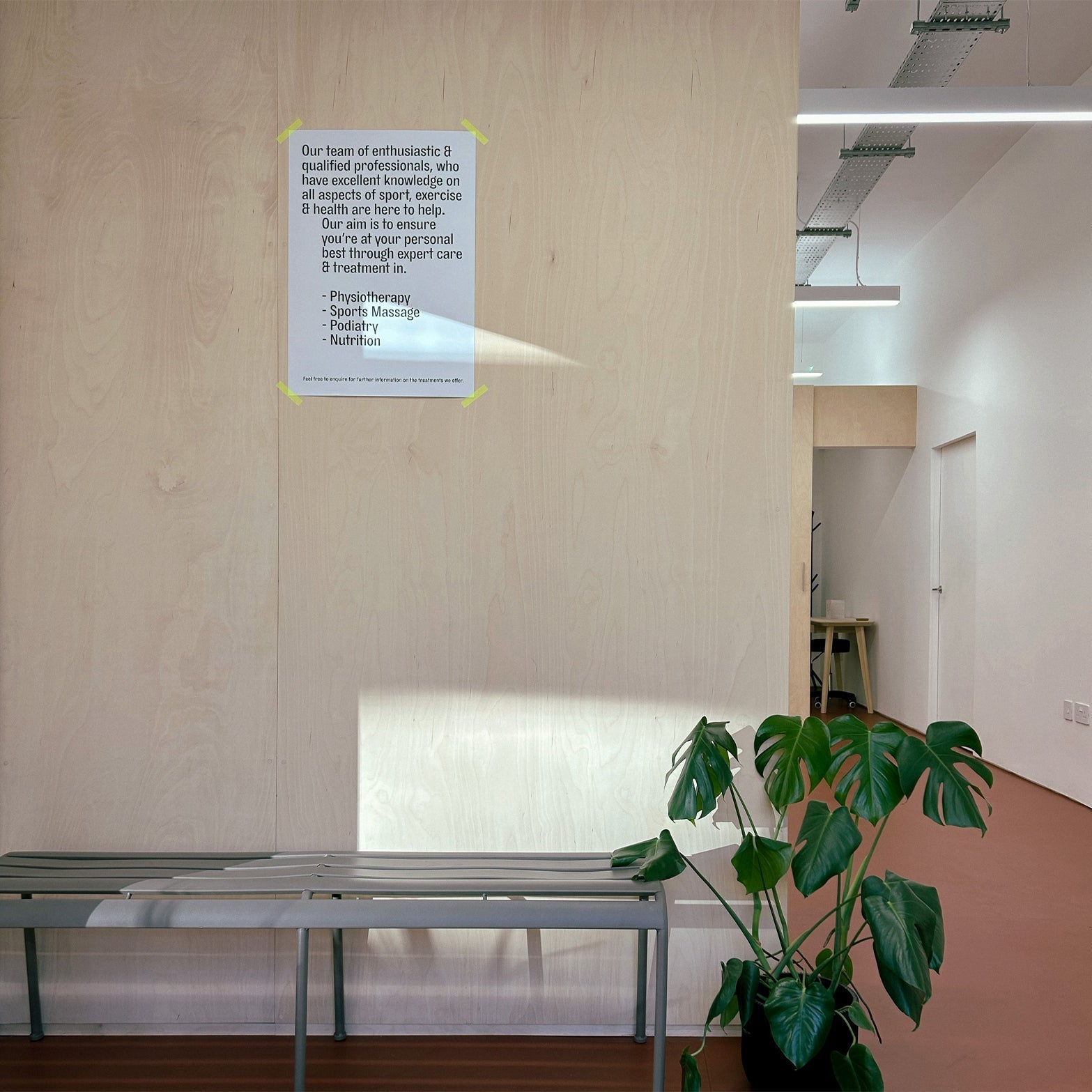
The clinic is staffed by a team of qualified, experienced practitioners offering a broad range of treatments. We're a sports injury and physiotherapy clinic covering most of what an active body might need, run by people who make great use of evidence-based treatments and techniques.
The philosophy across the whole clinic is simple: honest, effective treatment in a professional and friendly setting. No overselling, no stringing you along for sessions you don't need. Just getting you back to doing what you love.
Here's a look at what's on offer and how each treatment might be what you need.
Physiotherapy
This is the heart of the clinic. Forget the idea of being handed a generic exercise sheet and shown the door. The physiotherapists dig into what's actually causing your problem rather than just chasing the symptoms, then build a treatment plan around hands-on work and exercises suited to you.
Pain can come from almost anywhere. Muscles, joints, tendons, ligaments, nerves, and the causes are just as varied: an awkward fall, repetitive strain, the way you sit at work, or the demands of your sport. Whatever's behind it, the first job is an accurate diagnosis. From there, the team works with you through the full recovery, whether you're coming back from surgery, nursing a sports injury, or managing something longer-term. Fix the cause, and the injury is far less likely to return.
Sports Massage
Don't let the name put you off. Despite the "sports" label, this is one of the most useful treatments for people who never set foot on a track or in a gym.
If your work leaves you tense, knotted, or aching by the end of the day, massage does exactly what you'd hope—it loosens tight muscles, gets the blood moving, and shortens recovery time. The therapists work on the kind of tension that builds up from repetitive physical labour or from holding the same posture for hours, whether that's hunched over a desk, leaning over a chair, or standing at a till.
It's brilliant when you're deep in training, sure. But it's just as valuable as regular maintenance for anyone whose job grinds away at the same muscles week after week. Staying on top of that tension stops small problems turning into proper injuries—and keeps you able to do your job without your body holding you back.
Podiatry
Feet do an enormous amount of work and get very little attention in return. And nobody knows that better than people who spend their entire working day standing on them.
The clinic's podiatry service runs from straightforward foot care all the way to detailed biomechanical assessments. For runners, a lot of recurring injuries trace back to how the foot strikes the ground, with knock-on effects travelling up through the ankles, knees, hips, and back. But the same principle applies to anyone on their feet all day. Nurses, retail and hospitality workers, teachers, tradespeople—poor foot mechanics and the wrong footwear can leave you in pain that radiates well beyond your feet.
The podiatrists can analyse how you walk, fit custom orthotics, and treat conditions like plantar fasciitis and bunions, alongside general foot health and diabetic foot care. Sort out what's happening at ground level and you can clear up problems that seemed completely unrelated.
This is also where the shop and clinic genuinely overlap. Knowing how you move doesn't just shape your treatment—it points to the footwear that'll actually support you, whether you're racing or just trying to survive a long shift in comfort.
Shockwave Therapy
It sounds futuristic, but it's become a go-to for the kind of injuries that refuse to budge. Shockwave therapy sends acoustic waves into the affected area to trigger the body's own healing response, which is exactly what's needed when rest and stretching haven't done the job.
It's particularly effective on the long-running, morale-sapping injuries: chronic Achilles tendonitis, months-old plantar fasciitis, tennis elbow. These aren't exclusive to athletes—tennis elbow, for instance, is just as common in tradespeople and anyone doing repetitive gripping or lifting, and plantar fasciitis plagues people who stand for a living. The treatment helps break down scar tissue and boost blood flow to the area. It's non-invasive, can be a little uncomfortable while it's happening, and often delivers noticeable results within a handful of sessions. For anyone who's been stuck with the same injury for months, that can be a real turning point.
Nutrition
The part most people forget. No amount of treatment can compensate for poor fuelling, which is why nutrition sits alongside everything else the clinic offers. What you eat has a direct line to how quickly you heal, how much energy you have, and how well your body holds up to whatever you ask of it.
The advice here is grounded and realistic. No fad diets, no gimmicks. Whether you want to fuel your training better, manage your weight, work around a health condition, keep your energy steady through demanding shifts, or simply eat more sensibly, the guidance is tailored to your life and your goals. Good nutrition brings down inflammation, speeds up recovery, and gives you the resilience to get through your day, or your rehab without running on empty.
Why It Works
What makes the clinic tick is something straightforward: our team understand the body and how it's used. The clinicians are qualified, registered, and seriously invested in what they do, keeping their skills current through ongoing training.
That expertise is matched by a genuine commitment to honest, straightforward treatment, the same principle the shop has been built on for 25 years. Everyone gets the same care, regardless of what's brought them in. The goal doesn't change either: getting you back to doing what you need to do, comfortably.
There's a neat symmetry to all of this. A hub that grew out of one woman's Achilles injury now runs a clinic treating those very injuries every day, for runners and non-runners alike. The name was never just wordplay. It's been a statement of intent from the start.
Booking In
If you're in Glasgow and tired of pain, sluggish recovery, or a body that's not keeping up with the demands you put on it, getting booked in is easy. The team will work out where you're at and put together a plan that fits you specifically, rather than a one-size-fits-all routine.
It doesn't matter what's brought you here, a sporting injury, the toll of a physical job, a desk that's wrecked your posture, or pain you can't quite explain. The clinic is for everyone who needs help.
Head to the clinic site to read more, meet the clinicians, and book an appointment. Or come into the shop on Great Western Road for a chat. We're always happy to steer you in the right direction, whether that's a treatment, a pair of shoes, or both.
Read more

Super Shoes: What Are They, When to Use Them, and Do You Need Them There's a line in running his...

Black, Gold, and Fast Signature Nike collections in running don't come often. When they do, th...