
The Super Shoe Guide: History, Science, and When to Use Them
Super Shoes: What Are They, When to Use Them, and Do You Need Them
There's a line in running history: before 2016 and after 2016. One side has records that stood for decades. The other side has records tumbling like dominoes. The difference? A carbon plate, bouncy "superfoam", and a controversy that's still playing out.
Welcome to the era of the super shoe.

How It Started: The Vaporfly Revolution
The first shoes to incorporate carbon fibre plates were produced in 2016 by Nike, though interestingly, Brooks released the first carbon fibre-plated shoe sandwiched in midsole foam and outer rubber back in 1989. Nike's version, however, hit differently.
At the 2016 Summer Olympics in Rio de Janeiro, the top three finishers in the men's marathon all wore Nike Vaporfly 4% shoes, prototypes that weren't even available to the public yet. Kara Goucher placed fourth in the 2016 US Olympic marathon trials and received considerable coverage with the label of being the "first person to miss out on the Olympics for wearing the wrong shoes," calling foul play after realising athletes ahead of her were wearing unreleased prototypes.
In March 2017, Nike officially unveiled the Vaporfly Elite, declaring it had been developed to breach the two-hour marathon mark at the specially organised Breaking2 race in May. Olympic gold medallist Eliud Kipchoge finished the race in two hours and 25 seconds, just missing the sub-two-hour dream but setting an unofficial world record. The brand released a consumer version later that year, named the Vaporfly 4% after research findings that the shoe improved running efficiency by four per cent compared to alternatives on the market.
Then in 2019, Kipchoge tried again. This time, wearing an even more advanced prototype called the Alphafly, he completed the world's first sub-2-hour marathon during the INEOS 1:59 challenge. The record stayed unofficial—rotating pacemakers, hydration from bicycles, controlled conditions, but the point was made. The shoes worked.
The Impact: Records Falling Everywhere
Analysis of 500,000 marathon and half-marathon times by The New York Times found that people wearing Vaporflys ran between three and four per cent faster than those of similar abilities in other shoes. Sports scientist Ross Tucker declared the shoes "broke running."
The numbers tell the story. As of late 2023, 15 of the 20 top times for the marathon were set since 2018. In 2019 specifically, Nike's super shoes occupied 31 of the 36 podium places in the six major marathons. Non-Nike athletes started wearing them whilst their own brands scrambled to catch up.
They did. Adidas developed energy rods instead of full-length plates. ASICS introduced FF Blast Turbo foam with carbon. Saucony, New Balance, HOKA, Brooks, Puma, everyone jumped in. By 2026, at the Chicago Marathon, 64 per cent of runners wore carbon-plated super shoes, and in New York City it was 62 per cent. Nearly two-thirds of all runners, across every pace group. This isn't an elite phenomenon anymore. It's everyone.
What Actually Makes Them "Super"
Super shoes combine three key elements:
High-performance foam:
Typically PEBA-based (the same material used in airplane insulation), these foams are squishier, bouncier, and lighter than foams in typical running shoes. Nike calls theirs ZoomX. Other brands have their own proprietary versions: FF Blast Turbo, Nitro Elite, DNA Flash, FuelCell. They're all engineered for maximum energy return.
Carbon fibre plate:
Sits in the midsole, designed to generate extra spring in every step. The plate's geometry varies by brand. Some curve up at the toe, some are spoon-shaped, some use rods instead of full plates, but the principle stays consistent: provide structure to the soft foam and propel you forward.
Aggressive rocker geometry:
The sole curves to create a specific transition point, tipping you forward through each stride with less effort.
What's really interesting: even if you cut the carbon fibre insole into several pieces using a saw, the energy savings of the shoe are barely affected. Most of the benefit comes from the foam itself. The plate adds structure and prevents the soft foam from collapsing, but it's the foam doing the heavy lifting.
The Controversy and the Rules
World Athletics stepped in back in January 2020, publishing new regulations. Sole thickness was limited to 40 millimetres, and shoes with more than a single rigid plate were banned. The rules also stated that shoes must be available for retail purchase at least one month before competition.
Some critics call super shoes mechanical doping. Others argue that synthetic tracks, wind-legal courses, and pacemakers have always been part of the sport's technological progression. The debate hasn't gone away, but the regulations have given the sport a framework to work within.
How strictly that framework gets enforced is another matter. World Athletics president Sebastian Coe has stated the organisation won't "strangle innovation," and the recent London Marathon made clear just how much flexibility that leaves brands when a major release lines up with race day.

The Record That Changed Everything
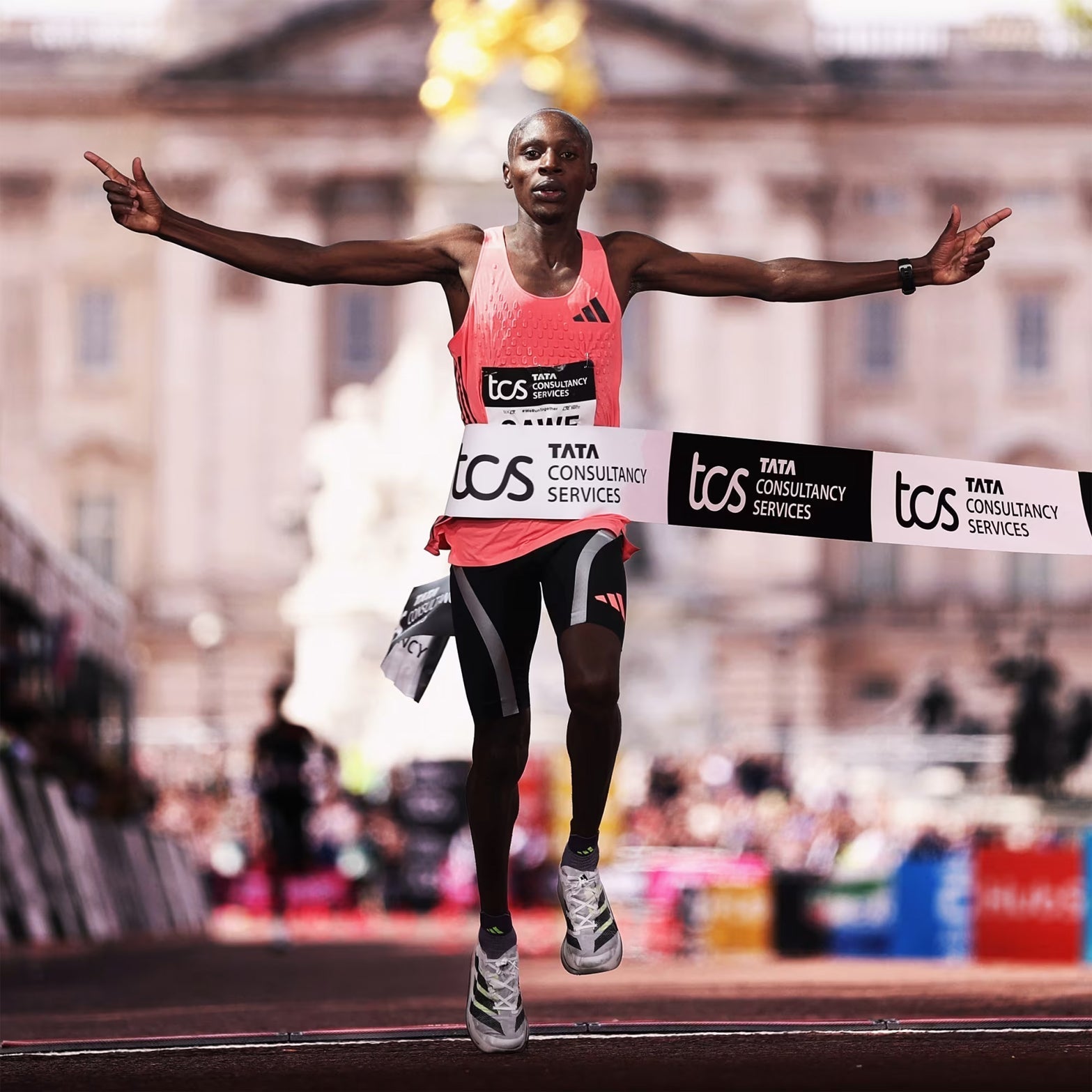
At the 2026 London Marathon, history was made. Sabastian Sawe became the first person to break the two-hour barrier in an official race, finishing in 1:59:30. Mere seconds behind him was Yomif Kejelcha, who posted the fastest debut marathon in history—also under two hours. Tigst Assefa, in the women's race, set a women's-only world record of 2:15:41.
All three wore the same shoe: the Adidas Adizero Adios Pro Evo 3.
The Evo 3 weighs just 97 grams in a men's size 9, making it the first running shoe to go sub-100 grams and the lightest race-legal model the industry has produced. It improves running economy by 1.6% compared to the Pro Evo 2, with most of that gain coming from a new Lightstrike Pro Evo foam that's 50% lighter than its predecessor. The upper takes its cue from kitesurfing sails—a feathery woven construction designed to shave every possible gram.
Then there's how it reached the runners. The Evo 3 was unveiled just days before the race. Adidas put 200 pairs on sale to technically satisfy the retail requirement, and they sold out in under two minutes. Pairs are already reselling online for up to $4,000. More limited runs are expected through 2026, with a broader commercial release lined up around the Berlin Marathon in September.
The rules haven't changed. 40mm maximum stack height, single plate only, retail availability required. But within those constraints, the technology keeps advancing. The two-hour barrier some sports scientists believed was still a decade away? Broken. In an official race.
Who Benefits Most (And Who Doesn't)
Here's the reality check: the average boost to running economy was 4% at paces between 3:20 and 4:17 per kilometre, but individual results ranged from 1.59 to 6.26%. And people running at slower paces see less benefit. Research found those running at a 5:00 per kilometre pace saw a 1.6% boost in running economy, whilst those running at a 6:00 per kilometre pace saw just 0.9%.
Translation: if you're holding sub-4:20/km in a marathon, super shoes can save you serious time. If you're cruising at 6:12/km pace, the benefit shrinks considerably. That doesn't make them useless for slower runners, 1% still matters over 42.2 kilometres, but the return on investment drops.
For competitive runners targeting a PR, carbon-plate shoes offer the single biggest legal performance gain available. A 4% improvement in economy is worth roughly 8 minutes in a 4-hour marathon.
When to Actually Use Them
Don't wear them for everything. Seriously.
When you run in carbon fibre shoes, your body uses different muscles to those you would use when running in normal shoes. Carbon shoes give you a good spring and bounce off the surface, but they also put a lot more pressure on your tendons, ankles, and Achilles.
One of the primary concerns is the potential for overuse injuries, particularly achilles tendinitis or stress injuries to bone. The rigid carbon plates and aggressive heel-to-toe drop can place extra stress on the Achilles tendon, calf muscles, and plantar fascia.
Best use cases:
- Race day (obviously)
- Key workouts: tempo runs, marathon-pace efforts, intervals where you're hitting target pace or faster
- Long runs with race-pace segments
Skip them for:
- Recovery runs (no need for assistance when you should be landing soft)
- Easy mileage (save your legs and save the shoe's lifespan)
- Every training session (your body needs variety)
It's perfectly fine to use carbon shoes twice a week during sessions such as intervals, fartlek, tempo, hills, and higher-performance training. Some runners even do their warm-up in non-plated shoes and then swap into the super shoes for the faster part of the run, which also helps the carbon-plate shoes last longer.
Or you can save them entirely for race day. By doing all your training without the help from super shoes, you'll get the full benefit on race day.
How Long They Last
Most carbon-plate shoes last 240–400km (150–250 miles) before the foam degrades enough to lose their performance advantage. This is significantly less than daily trainers at 640–800km (400–500 miles). Research on prototype shoes from On Running found that 450km (280 miles) of wear caused deterioration in super-shoe performance, though some earlier testing suggested the foam held up longer.
At current prices—£200 to £300 for most models, that works out to roughly £0.60–£1.25 per kilometre of racing. Worth it if you're chasing a PB. Less compelling if you're just logging training miles.
The Best Super Shoes Right Now (Spring 2026)
The market's flooded with options. Here's what's leading the pack:
Nike Alphafly 3: The single most popular shoe—about 16 per cent of all Chicago Marathon finishers wore it. ZoomX foam, dual Zoom Air units in the forefoot, FlyPlate carbon. Weighing just 5.9 oz (166g), remarkably lighter than the average 7.3 oz (207g) racer. Maximum cushioning, maximum bounce. £285.
Nike Vaporfly 4: The latest evolution of the original. Stamped with "The Original Super Shoe" on the medial midsole. Lighter than the Alphafly, more versatile across shorter distances. The most versatile super shoe in Nike's racing line-up, offering amazing performance for everything from a 5K to the marathon. £245.
Adidas Adizero Adios Pro 4: For the Boston Marathon, athletes wearing the Adidas Adizero Adios Pro 3 claimed the top four places in the men's race. The Pro 4 refines that formula. Five carbon-infused energy rods instead of a full plate, positioned to mirror foot anatomy. Less rigid, more stable. £220.
ASICS Metaspeed Sky Tokyo / Edge Tokyo: Two versions: Sky for stride-length runners, Edge for cadence-focused runners. The lightest super shoe in the market, really excels at fast paces. FF Blast Turbo foam, carbon plate. £240.
Puma Fast-R Nitro Elite 3: Research suggested it boosts running efficiency even more than top racing options like the Nike Alphafly 3 and Adidas Adios Pro Evo 1. Full-length carbon PWRPLATE that extends past the toes. Wildly rockered. Not for everyone, but seriously fast for those who click with it. £260.
Saucony Endorphin Elite 2: All-new incrediRUN TPEE foam delivering a softer, bouncier underfoot feel that's less rigid and more naturally springy than many firmer super shoes. Good first super shoe. £280.
HOKA Rocket X 3: Differentiates itself with a more stable, controlled feel, pairing a winged carbon fibre plate and dual-density PEBA foam. Unisex sizing. More forgiving than some of the aggressive options. £220.
New Balance SuperComp Elite v5: Not as fast as some of its peers, but a highly comfortable ride underfoot with a secure base. FuelCell foam, carbon plate. Another solid first-timer option. £230.
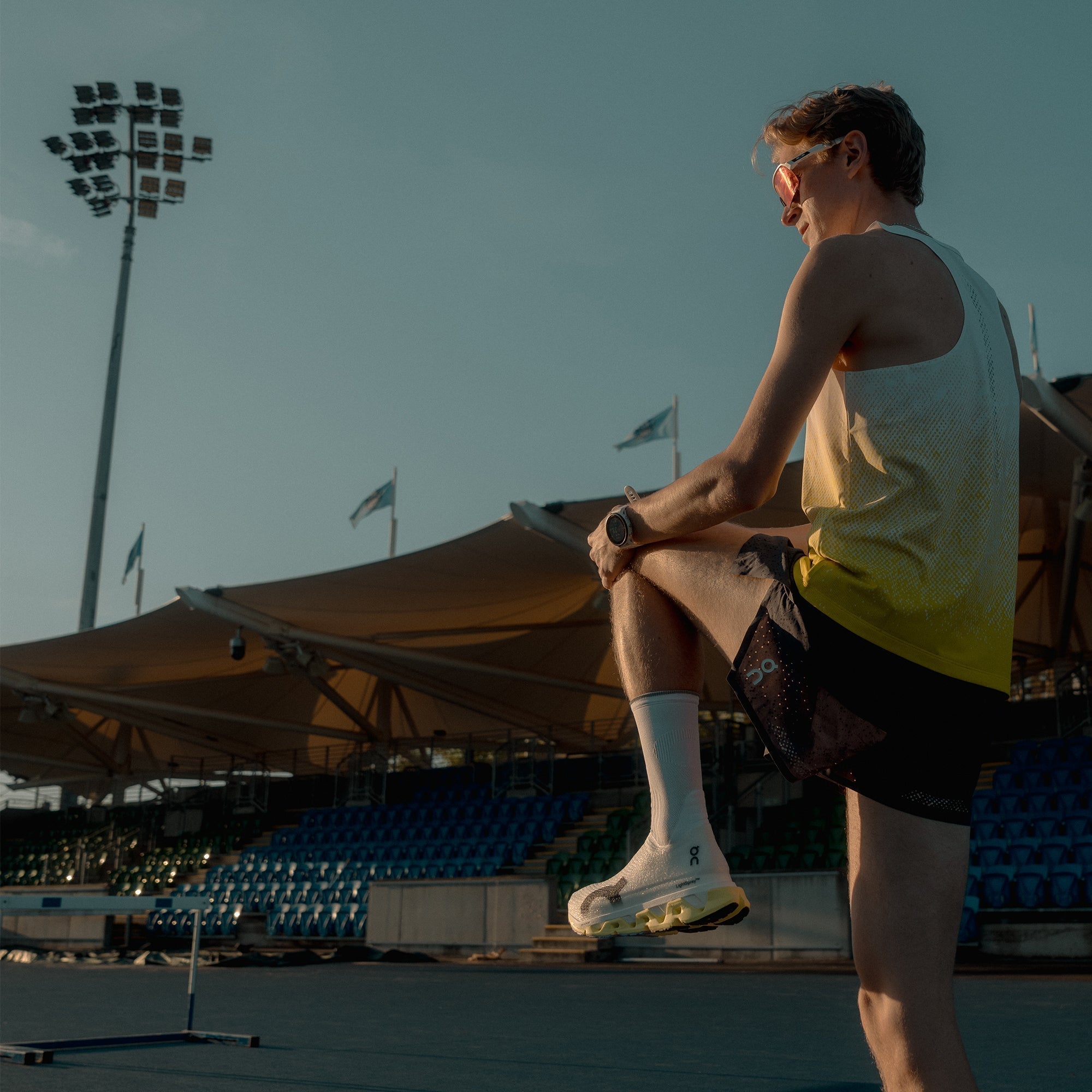
On Cloudboom Strike LS: A lighter, more sustainable take on On's top-tier marathon racer. The LightSpray upper is robotically applied, using significantly less material than traditional construction. Sits on the same dual-layer Helion HF midsole and full-length carbon Speedboard as the standard Cloudboom Strike. £310.
Do You Actually Need Them?
Honest answer: depends.
If you're racing and chasing times, yes. The performance advantage is real and measurable. Every serious competitor is wearing them. If you show up to a marathon in traditional racing flats, you're giving away minutes.
If you're running for fitness, health, or just because you enjoy it. Maybe not. Many runners don't use carbon-plated shoes at all, preferring a comfortable daily trainer for all or most of their runs, and there's absolutely nothing wrong with that.
If you're new to running or building base fitness, start with a daily mileage shoe. Get your body adapted to consistent training first. Super shoes change your stride mechanics and load different muscles, jumping straight into them without a solid foundation is asking for injury.
If you do want to try them, ease in gradually. Use them for one workout a week. See how your body responds. Pay attention to calf tightness, achilles discomfort, shin pain. If everything feels good, add race day. That's plenty.
What's Available at Achilles Heel
We stock the current generation of super shoes from Nike, Adidas, ASICS, Saucony, HOKA, New Balance, and Puma. Pop into the shop on Great Western Road to see them in person. We'll talk you through what suits your training, help you find the right fit, and be straight about whether you actually need them or if your money's better spent elsewhere.
Super shoes changed running. Whether they change your running depends on what you're chasing and how you train.
Read more
When Robots Build Your Running Shoes There's a factory in Busan, South Korea, where no human ha...

More Than a Running Shop Most people know Achilles Heel as a running shop. The shoes, the kit, ...